

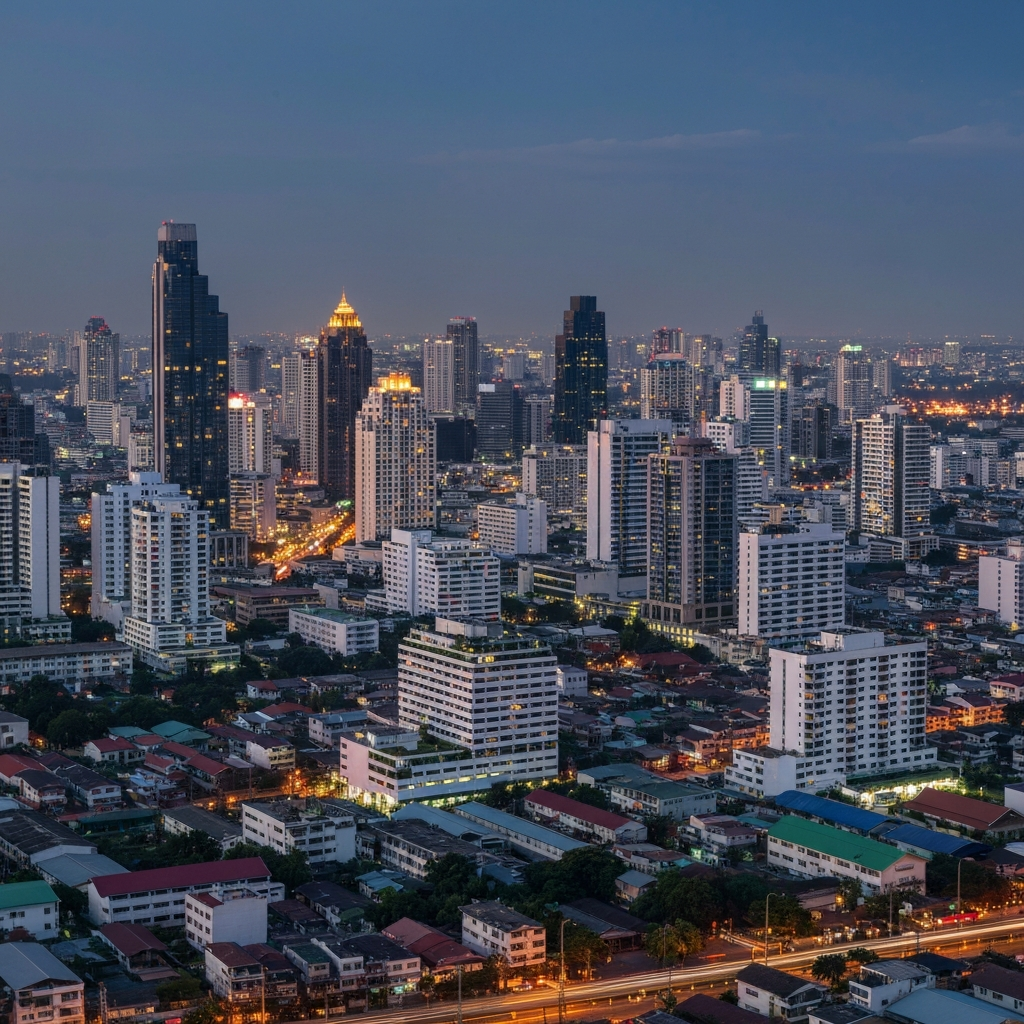
Bangkok’s real estate market continues to evolve, influenced by various economic and social factors. This article provides an overview of current market trends, rental dynamics, home buying insights, and local developments shaping the city’s property landscape.
Market Trends
In recent years, Bangkok has experienced a surge in condominium supply, particularly in suburban areas. Despite this increase, demand remains robust in prime central districts such as Sukhumvit, Sathorn, and Silom. These areas continue to attract both local and international buyers due to their proximity to business hubs and amenities. However, certain suburban segments face oversupply, leading to competitive pricing and opportunities for buyers seeking value.
Rental Dynamics
The rental market in Bangkok has shown resilience, with strong demand from expatriates and local tenants. Median monthly rents are approximately ฿31,700, with a median rent per square meter of about ฿605. This indicates that investors can secure quality rental properties at competitive rates compared to other major global cities.
Occupancy rates in desirable buildings consistently exceed 90%, and in the prime residential segment, vacancy has declined to record lows. This surge in occupancy results from both returning expatriates and local tenants who prioritize rental flexibility over property ownership.
Home Buying Insights
For prospective homebuyers, Bangkok offers a diverse range of properties catering to various preferences and budgets. The market is primarily driven by local Thai buyers, with foreign investors also playing a significant role. Popular areas for property purchases include central districts like Sukhumvit and emerging neighborhoods along new transit lines.
It’s essential for buyers to conduct thorough research, considering factors such as location, developer reputation, and potential rental yields. Engaging with reputable real estate agents and legal advisors can provide valuable guidance throughout the purchasing process.
Local Developments
Bangkok’s urban landscape is continually transforming, with infrastructure projects enhancing connectivity and accessibility. The expansion of the mass transit system, including new BTS and MRT lines, has opened up previously less accessible areas, making them attractive for both residential and commercial developments.
Additionally, the city has seen a rise in mixed-use developments that combine residential, commercial, and recreational spaces. These projects aim to create self-sustaining communities, offering residents convenience and a high quality of life.
Conclusion
Bangkok’s real estate market presents a dynamic environment with opportunities for investors, renters, and homebuyers alike. Staying informed about market trends, rental dynamics, and local developments is crucial for making well-informed decisions in this ever-evolving landscape.