

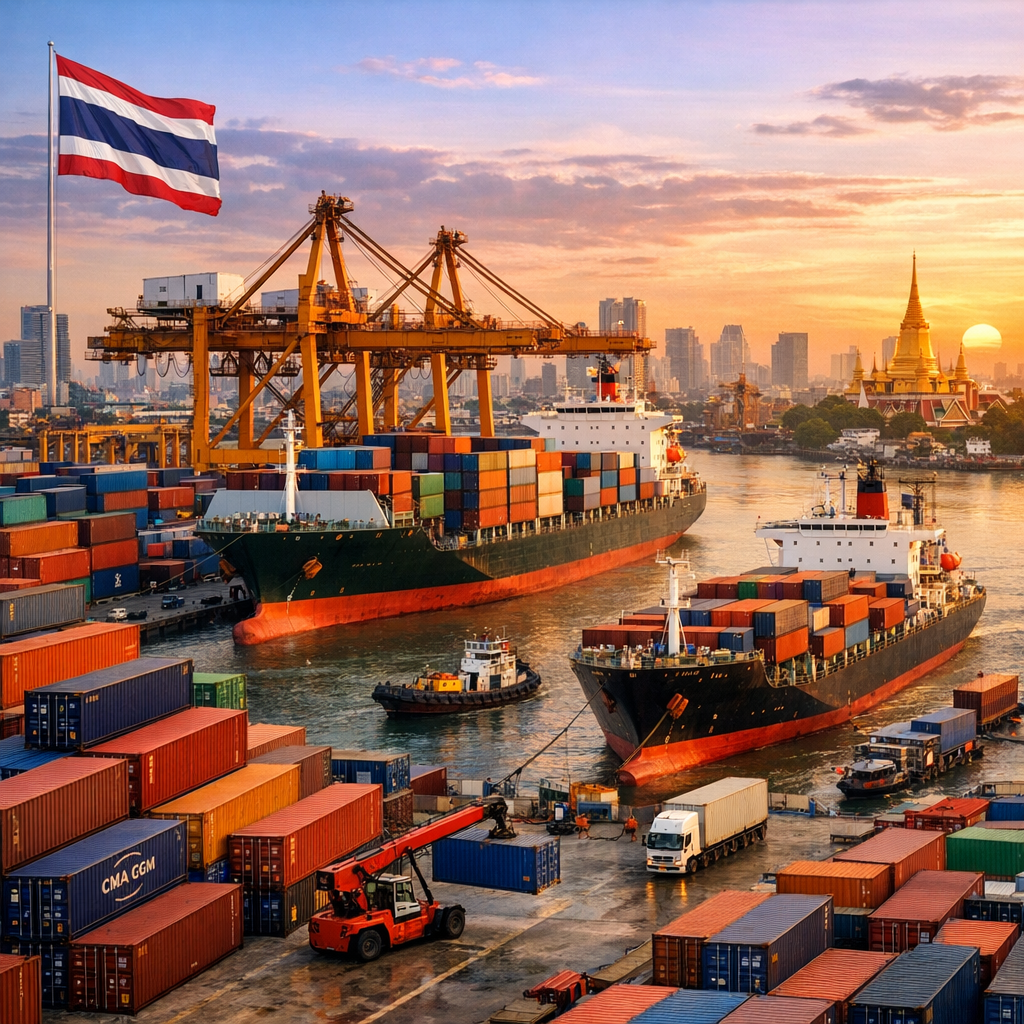
Thailand has long been recognized as a pivotal player in global trade, leveraging its strategic location and robust infrastructure to serve as a key hub in Southeast Asia. As the global economic landscape undergoes significant transformations, Thailand’s role continues to evolve, presenting both challenges and opportunities.
Strategic Positioning in Global Supply Chains
In recent years, Thailand has emerged as a central node in the reconfiguration of global supply chains. The “China + N” strategy, adopted by numerous multinational corporations to diversify manufacturing bases beyond China, has significantly benefited Thailand. This approach aims to mitigate risks associated with over-reliance on a single country by establishing operations in multiple nations, with Thailand being a preferred destination due to its developed infrastructure and business-friendly policies.
According to a report by ASEAN Briefing, foreign direct investment (FDI) into Thailand surged to 1.13 trillion baht (approximately US$33 billion) in 2024, marking a 35% increase from the previous year. This influx underscores investor confidence in Thailand’s strategic trajectory and its capacity to accommodate diversified manufacturing operations.
Infrastructure Development and Economic Initiatives
Thailand’s government has been proactive in enhancing the country’s appeal as a logistics and manufacturing hub. Massive investments in strategic infrastructure projects, such as the Eastern Economic Corridor (EEC), the expansion of Laem Chabang Port, and the development of a new land bridge project, have been instrumental in this transformation. These initiatives aim to bolster connectivity, streamline supply chains, and attract high-value manufacturing sectors, including automotive and electronics industries.
The EEC, in particular, has successfully attracted significant foreign investment, with companies like BYD and Toyota establishing operations in the region. This development aligns with Thailand’s ambition to position itself as ASEAN’s premier logistics hub amid global supply chain realignments.
Trade Relations and Economic Resilience
Thailand’s commitment to an open and rules-based multilateral trading system is evident in its active participation in the World Trade Organization (WTO) and various free trade agreements. The Ministry of Commerce has engaged with over 50 representatives from the US-ASEAN Business Council to strengthen trade relations and attract investment. These discussions have focused on resolving trade barriers, expanding market access, and promoting Thailand as a strategic hub for U.S. investors.
Despite global economic uncertainties, Thailand’s economy has demonstrated resilience. The National Economic and Social Development Council (NESDC) projected that the Thai economy would expand between 2.3% and 3.3% in 2025, supported by favorable growth in domestic private consumption, investment, and a sustained recovery of the tourism sector.
Challenges and Future Outlook
While Thailand’s strategic initiatives have positioned it favorably in the global trade arena, challenges remain. The imposition of higher tariffs by major economies, such as the United States, has potential implications for Thai exports, particularly in sectors like electronics and automotive parts. Additionally, the potential surge in imports from countries like China, as producers seek alternative markets, may impact domestic industries.
To navigate these challenges, Thailand continues to focus on economic development in key areas, including preparing to cushion the impact of trade policy changes by key trading partners, accelerating private investment, and ensuring the continued expansion of the tourism sector. By addressing these areas, Thailand aims to maintain its competitive edge and sustain economic growth amid evolving global trade dynamics.
In conclusion, Thailand’s evolving role in global trade reflects its strategic adaptability and commitment to economic resilience. Through infrastructure development, proactive trade policies, and a focus on diversification, Thailand is poised to navigate the complexities of the global economic landscape and continue its trajectory as a key player in international trade.