

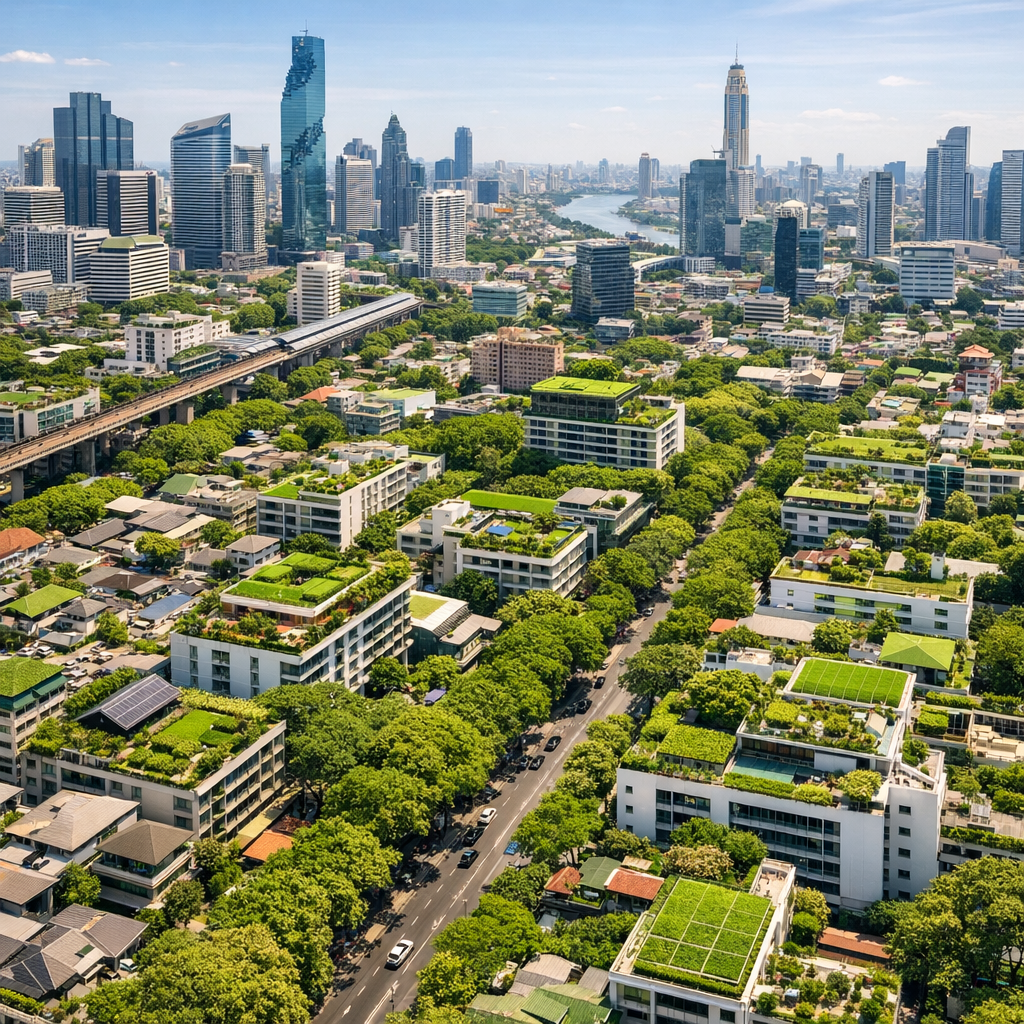
Bangkok, renowned for its vibrant culture and bustling streets, is confronting a pressing challenge: escalating urban heat. The city’s rapid urbanization and dense infrastructure have intensified the Urban Heat Island (UHI) effect, leading to higher temperatures that impact residents’ health, productivity, and overall quality of life.
Understanding the Urban Heat Island Effect
The UHI effect occurs when urban areas experience higher temperatures than their rural surroundings due to human activities and infrastructure. In Bangkok, neighborhoods such as Pathum Wan, Bang Rak, Ratchathewi, and Phaya Thai are notably affected, with temperatures up to 2.8°C warmer than adjacent rural areas. This temperature disparity is primarily attributed to dense high-rises and extensive concrete surfaces that absorb and retain heat.
Impacts on Health and Economy
The consequences of rising urban heat are multifaceted. Health risks include heat-related illnesses and increased mortality rates, particularly among vulnerable populations. Economically, higher temperatures can lead to reduced labor productivity and increased energy consumption for cooling, placing additional strain on both individuals and businesses.
Strategic Initiatives for Mitigation
Recognizing the urgency of this issue, the Bangkok Metropolitan Administration (BMA) has collaborated with international organizations to develop and implement strategies aimed at mitigating urban heat. Key initiatives include:
Enhancing Green Spaces
Expanding urban greenery through the development of parks, green roofs, and tree-lined streets helps to cool the environment by providing shade and facilitating evapotranspiration.
Implementing Cool Roofs and Pavements
Utilizing reflective materials in roofing and pavement construction reduces heat absorption, thereby lowering surface temperatures and contributing to a cooler urban environment.
Improving Urban Planning
Integrating heat mitigation measures into urban planning processes ensures that new developments incorporate design elements that reduce heat accumulation, such as optimized building orientation and ventilation.
Community Engagement and Education
Public awareness campaigns and community engagement are vital components of Bangkok’s heat mitigation strategy. Educating residents about the causes and effects of urban heat, as well as promoting individual actions like planting trees and reducing energy consumption, empowers communities to contribute to a cooler city.
Looking Ahead
While challenges remain, Bangkok’s proactive approach to addressing urban heat demonstrates a commitment to enhancing the city’s livability and resilience. Continued collaboration between government agencies, international partners, and local communities will be essential in shaping a cooler, more sustainable future for Bangkok.