

By Achara Boonmee
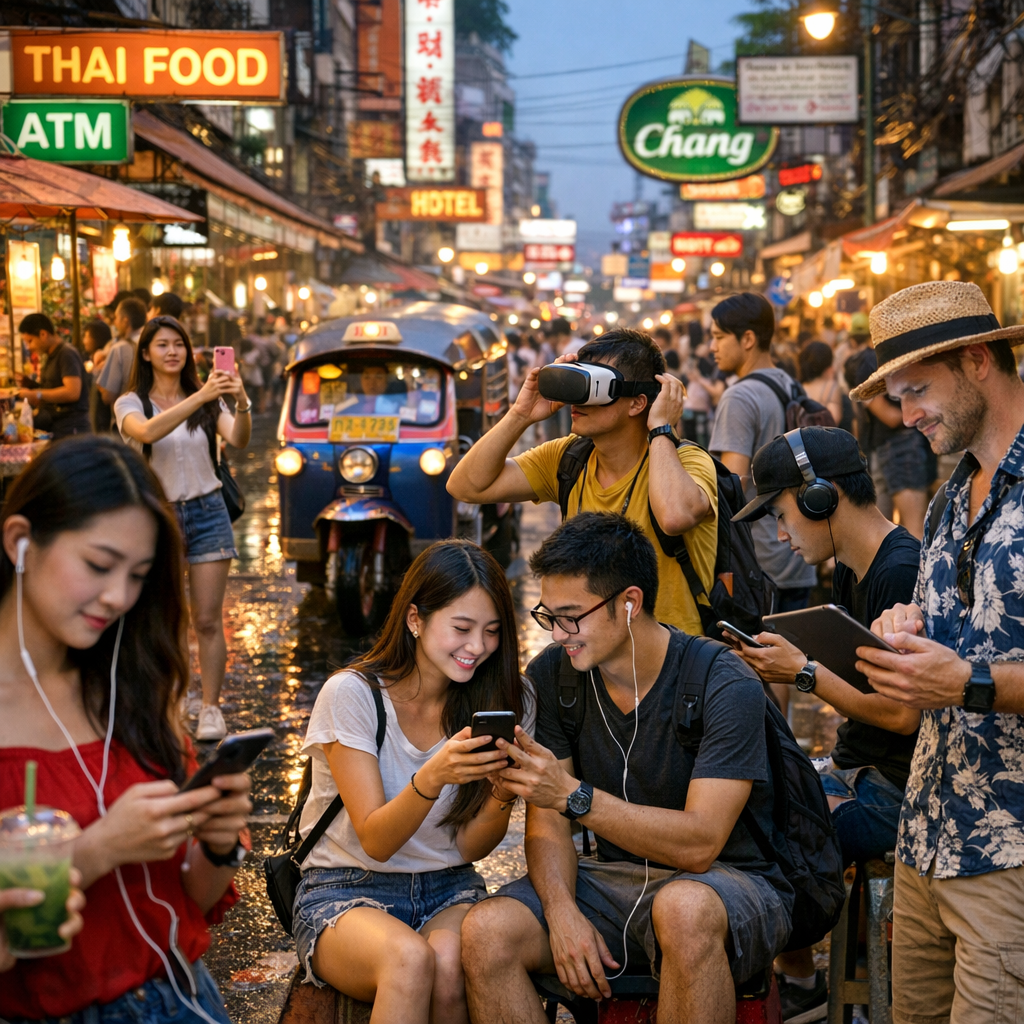
Walking through neighborhoods in Bangkok today, you’ll notice how tech has seeped into routine moments—a smartphone app arranging motorbike rides, voice assistants reminding elders about medicines, students summarizing essays with generative AI. These shifts are neither flashy nor hyperbole; they are real signs that technology is reshaping life quietly but deeply.
Why Bangkok is Turning AI-Native
Thailand leads Southeast Asia in everyday AI usage. A recent report found over 90% of students and more than 80% of teachers regularly use generative AI tools for writing, translating, or tutoring.
Meanwhile, business adoption is rising fast: 43% of Thai firms now use AI consistently, up from 32% the year before. But most are still using basic tools—using ready-made chatbots or simple analytics rather than building advanced AI systems. Challenges like skills gaps and unclear governance are holding back deeper integration. Data infrastructure is improving, but firms and government agencies often use systems that don’t talk to each other. This limits what AI could otherwise unlock across sectors.
Which Gadgets and Platforms Are Everywhere
Smartphones remain central—in fact, there are more mobile connections than people, and almost everyone accesses the internet via a mobile device. Bangkok’s urban pace magnifies the impact: commuters spend hours scrolling, streaming, or tapping through social commerce platforms every day.
Outside social media, AI has found roles in household devices. Voice assistants, translation apps, and creative tools are fast becoming mundane. And though wearable AI (such as fitness trackers or smartwatches) hasn’t exploded in Bangkok as yet, global trends point in that direction—including devices that act as “second brains,” helping you organise work, health, and content.
Everyday Impacts: Learning, Living, Small Business
For students in Bangkok, AI offers practical shortcuts—summaries, tutoring help, or instant translations—allowing them to focus on understanding, not just copying. Teachers, too, are learning to adapt, using AI-assisted grading or content generation.
At home, smart devices are slowly entering the mix. Families use apps to monitor bills, schedule cleaning or security systems, and find health advice online. Chatbots from banks and utilities handle common questions late at night—making services feel smoother.
Meanwhile, small businesses are leveraging tech to stay afloat. Many MSMEs (micro, small and medium enterprises) now sell via online platforms and social media—not just to reach customers, but also to test what products work through fast feedback loops. Automation tools for inventory or logistics are still rare, but growing.
What Needs Attention Moving Forward
Even as tech becomes more present, not everyone benefits equally. Rural communities and older adults need better digital literacy support. Understanding privacy laws—especially around personal data—is often confusing. If governance structures stay weak, misuse and digital distrust could rise.
On the business side, moving beyond basic AI—towards customized tools, reliable data sharing, and stronger regulation—could unlock far more value. Investment in local talent, educational alignment, and interoperable systems will matter as much as the hardware or software we use.
Tech That Helps, Not Overwhelms
Bangkok’s future isn’t about fancy gadgets; it’s about balanced tools that solve real problems—reducing time spent commuting, helping people understand government or healthcare information, supporting students who can’t afford tutors. That kind of everyday tech matters.
When AI and innovation focus on people—how ordinary Thais live, work, learn—then tech’s promise becomes more than speculation. It becomes part of the feel, flow, and functionality of life in this city.