

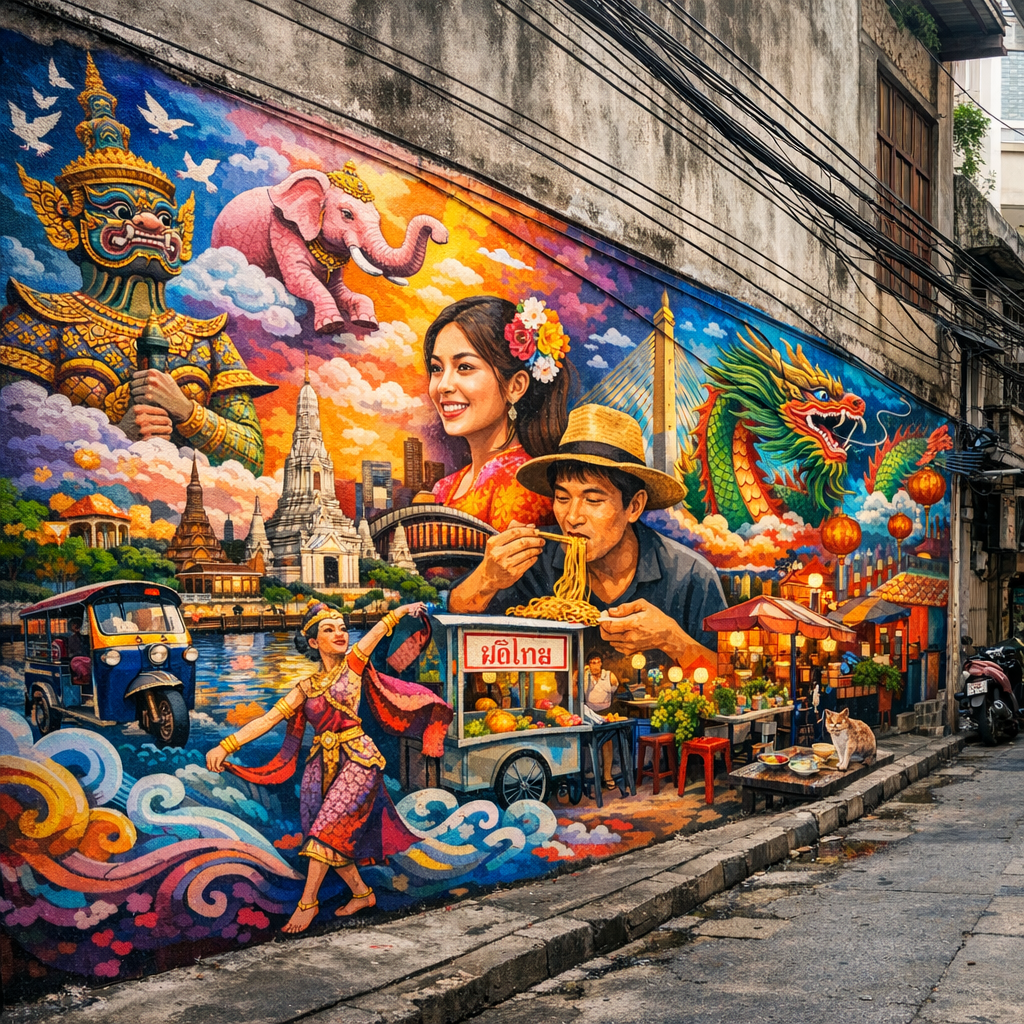
Bangkok is more than temples and tuk-tuks. Increasingly, its streets are alive with colour, texture, stories. From expansive murals in Charoen Krung to subtle stencil tags in Talat Noi, the city is a living art gallery. Here’s a guide to where to explore street art in Bangkok, who’s creating it, and how to experience it with respect.
Creative Districts & Must-Visit Areas
Charoen Krung Road & Sois – Between BTS Saphan Taksin and the river, the stretch along Charoen Krung Road, particularly sois 28 to 36, hosts large-scale murals, art-filled warehouse facades, and warehouses converted into galleries and cafés. Warehouse 30 anchors this area as a creative hub. Early morning light reveals bold colours and fewer crowds.
Talat Noi & Riverside Lanes – Narrow alleys by the river harbour hidden works, from commissioned pieces to little painted shutters. Talat Noi rewards close look-see: over doorways, narrow alleys, on utility boxes. It’s intimate and feels like discovery at every turn.
Chinatown & Song Wat – In and around Yaowarat Road here, shuttered shop fronts and temples share space with vivid murals. Song Wat, especially, interweaves local food culture, architecture, and creative graphics based in myth, daily life, and heritage.
Public Art Parks & Walkways – Chaloemla Park is a popular place for free-form graffiti and mural art in more sanctioned settings. Meanwhile, the Skywalks, public art installations like those in One Bangkok’s collection, and riverside promenades are gradually incorporating outdoor sculpture and large public pieces.
Notable Artists & Styles to Look For
Artists like Alex Face are instantly recognisable, often depicting wide-eyed child-animal hybrid characters that explore innocence, identity, and modern anxieties.
Mue Bon (Bon Thongkam) uses playful animal figures and surreal characters. Rukkit Kuanhawate draws on Buddhist and local myth motifs, blending traditional visual elements with contemporary design. Keep an eye out for collective or political works too—artists like TRK and Headache Stencil contribute socially charged pieces.
Planning Your Walk & Experience Tips
- Go early morning (around 7-10 AM) for softer light, fewer people, and comfortable weather.
- Bring water and wear comfortable shoes. Sois and alleys are charming, but uneven. Shade may be limited.
- Photograph from public walkways. Resist entering private property or obstructing residents. Respect is key.
- Combine art with food and culture. After a walk through murals, stop for street food or visit BACC, MOCA, or small-scale galleries nearby.
- Street art changes. Some murals last years, some weeks. Each visit may bring surprises or transformations.
How Street Art Fits into Bangkok’s Cultural Ecosystem
What was once fringe now often intersects with institutional art scenes. Galleries show works by street artists; festivals like Design Week place commissions on public walls; urban redevelopment plans sometimes include public art as part of the landscape. Yet many pieces retain raw urgency—commentary on social issues, heritage, the contrast of progress and decay.
For residents and curious visitors alike, exploring street art offers a way into Bangkok’s living conversations—history, identity, creativity—in a format that’s public, ephemeral, accessible.